
It Starts with Itching: How Industrial Contact Dermatitis Develops Over Time
Your skin is itching. It is red, giving a burning sensation and maybe it is cracking too.
You think it is normal irritation and ignore it. Then you go back to work the next day.
But here is the thing. That itching and burning has a name. It is called dermatitis. And it is not something you should ignore and bear lifelong.
Thousands of workers across Durgapur, Jharkhand and the surrounding industrial areas deal with industrial dermatitis every single day. Most of them do not even know what is causing it. Nobody told or warned them. This blog is meant for that purpose.
What Is Occupational Contact Dermatitis and Who Gets It?
Let us keep this very simple.
- Occupational dermatosis means any skin problem that comes from your job / occupation / workplace.
- Contact dermatitis means your skin got irritated or damaged because it touched something that caused irritation or allergies.
It happens in two ways:
Irritant Contact Dermatitis
Something at work touches your skin and directly damages it.
Allergic Contact Dermatitis
Something at work touches your skin and your body starts treating it like an enemy. Your skin then reacts badly every time it touches that thing again.
Who is most likely to get this:
- People working in welding, metal cutting or machining
- Construction workers who handle cement, concrete or glue every day
- Nurses and doctors who wear gloves and use sanitisers all day
- Factory workers in chemical, textile or rubber plants
- Painters and printers who work with resins and solvents
- Food factory workers whose hands are always wet or in cleaning liquids
Simply put, if your hands or skin touch chemicals, water, dust or even the rubber gloves every day at work, you are at risk of industrial dermatitis.
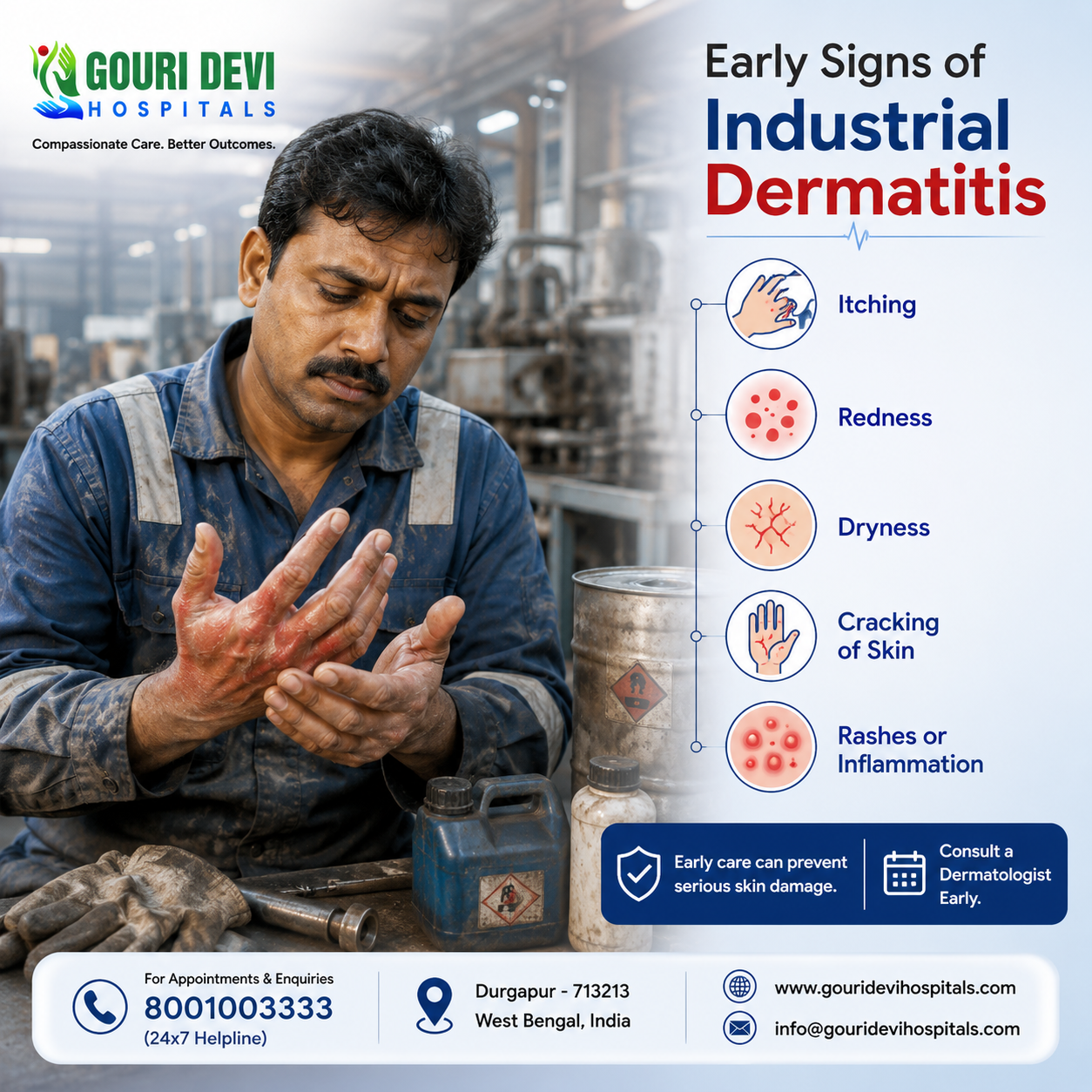
Common Causes of Occupational Dermatosis in Manufacturing Jobs
A lot of things inside a factory can damage your skin. Here are the most common ones:
- Machine oils and cutting fluids. Every time your skin touches them, they slowly wear down your skin's natural protection
- Cleaning chemicals like acetone and toluene. These are very harsh on the skin when you touch them regularly
- Epoxy glues and hardeners. Very common cause of allergic industrial dermatitis in factory workers
- Cement, metals and dyes. Cement in particular contains a chemical called chromium. This is the main reason cement dermatitis is so common in construction workers
- Your own gloves. Yes, the rubber chemicals inside gloves can actually cause skin reactions in some workers
- Soaps and cleaning sprays. Using them many times a day slowly removes the natural oils that protect your skin
- Wet hands. If your hands stay wet for more than two hours every day, that alone is enough to cause irritant contact dermatitis over time
- Fibreglass and mineral wool dust. These tiny particles scratch and irritate the skin just by touching it
- Flour dust, wood dust and latex. Common in bakeries, carpentry and hospitals
Allergic vs Irritant Contact Dermatitis in the Workplace: What Is the Difference?
Think of it this way.
Irritant Contact Dermatitis
It is like rubbing sandpaper on your skin every day. Eventually anyone's skin will get damaged.
- Any chemical or substance that is harsh enough will damage skin if you touch it enough times
- It gets worse slowly over days, weeks or months
- Common causes are soaps, solvents, wet hands and friction
- It usually gets better once you stop touching the thing that caused it
Allergic Contact Dermatitis
This is different. Your body decides one specific thing is dangerous and starts fighting it.
- Not everyone gets this. Only some people's bodies develop this reaction
- It can take months or even years of touching something before the reaction starts
- Once it starts, even a tiny amount of that substance makes your skin react badly
- Common causes are nickel, chromium, epoxy glues and rubber chemicals
- The rash can spread even to skin that did not touch the substance
- This reaction is permanent. Your body will always react to that substance now
Both are types of industrial dermatitis and both need proper treatment. But the allergic type is more serious because once it develops, it cannot be reversed.
Industrial Contact Dermatitis in the Construction Industry
Construction workers have one of the highest risks of getting industrial dermatitis. Here is why.
- Cement dermatitis is very common on building sites. Wet cement has a chemical called hexavalent chromium in it. Once your skin becomes sensitive to it, even a little contact causes a bad reaction
- It starts with just dry, red skin. But if you keep working without protection, it turns into deep painful cracks that can bleed and become infected
- Concrete, mortar and plaster all damage the skin's natural protection layer because they are very alkaline
- Waterproofing products and tile glues often have epoxy in them which can cause allergic reactions over time
- Dust, heat and constant rubbing make the skin damage even worse
- Many construction workers either do not wear gloves or wear old damaged gloves that do not protect properly
The other problem is that occupational dermatitis on construction sites almost never gets reported. Workers just accept it as normal. Many serious skin cases have been quietly getting worse for years before someone finally sees a doctor.
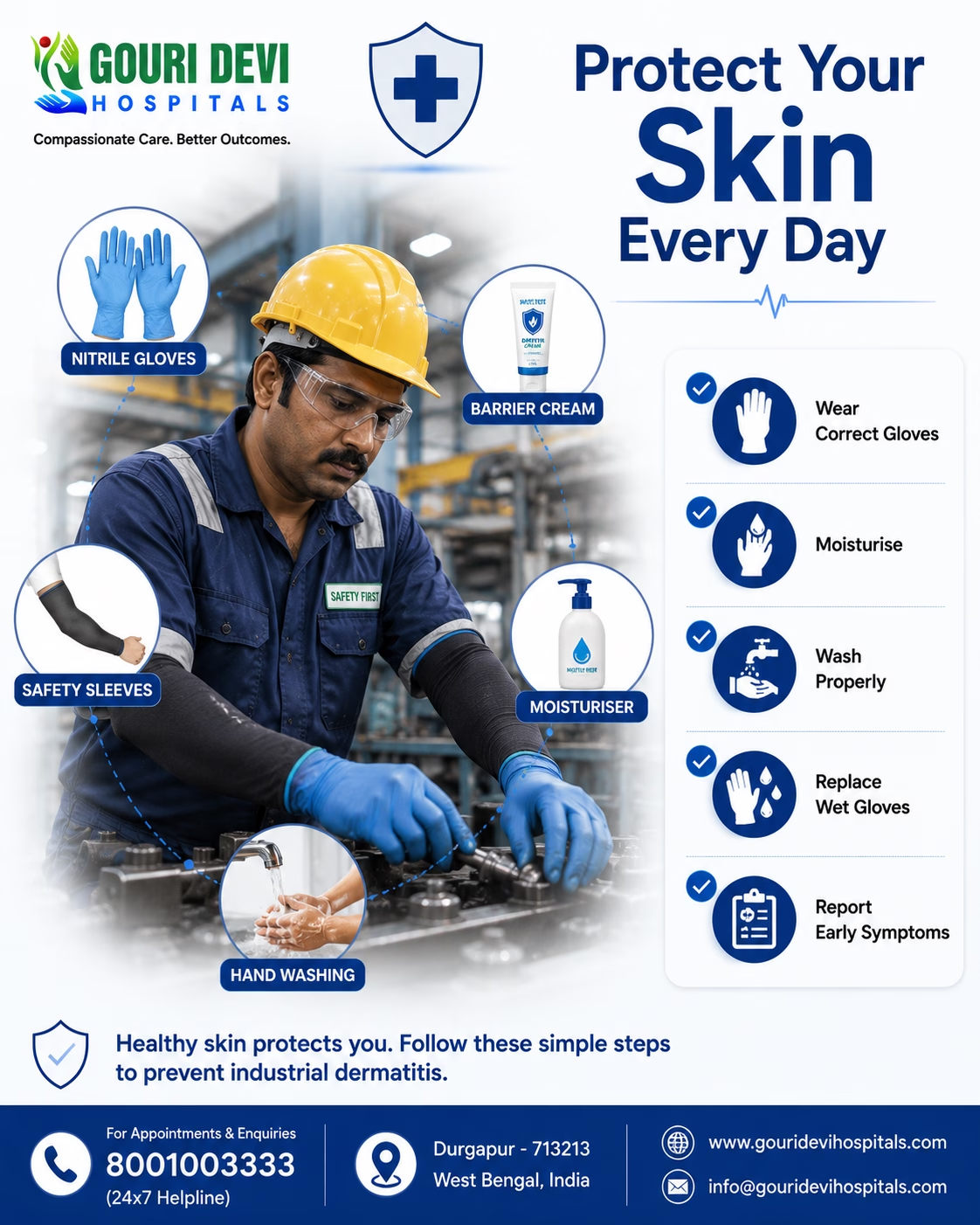
How to Prevent Industrial Dermatitis When Working with Industrial Chemicals
Stopping the problem before it starts is always easier than treating it later. Here is what actually works:
- Ask management to use safer chemicals where possible. If there is a less harmful option that does the same job, use that instead.
- Use the right gloves for the job. Not every glove protects against every chemical. Nitrile gloves work for most solvents. If you are sensitive to latex, do not use latex gloves. When in doubt, ask.
- Change your gloves regularly. A glove with a hole in it or one that is soaked through is not protecting you at all. In fact, it can make things worse.
- Give your hands a break from water. If your work involves wet hands, take breaks where your hands can dry out.
- Wash with mild soap and lukewarm water. Hot water and strong soaps damage your skin faster than most of the chemicals you are trying to wash off.
- Use moisturiser after every wash and before going home. This is not optional. It is one of the most important habits you can build if you work in a high-risk job.
- Put barrier cream on your skin before you start your shift. Think of it like sunscreen for your hands. It does not replace gloves but it adds an extra layer of protection.
- Never use thinner or solvent to clean your hands. Many workers do this without thinking. It causes serious skin damage every single time.
Barrier Creams vs Gloves for Industrial Skin Protection: Which One Is Better?
Short answer. You need both. Neither one replaces the other.
Gloves
- Give the best protection against chemicals and water when you use the right type
- The wrong type of glove can actually soak up certain chemicals and press them against your skin
- In very risky jobs, wearing two pairs of gloves at once is a good idea
- Even gloves can cause irritant contact dermatitis because your hands sweat inside them during long shifts
Barrier Creams
- Give extra protection to the parts of your skin that gloves do not cover
- Useful when wearing gloves makes the particular job too difficult to do
- Never use cream as the replacement of gloves
- After-work moisturising creams are different. They help your skin recover after the shift is done
Use both together. Wash hands properly. Moisturise regularly. That is the complete picture of real skin protection at work. And remember, contact dermatitis treatment is always easier when you already start protecting your skin before the problem occurs.
Signs of Chronic Industrial Hand Eczema
When industrial dermatitis is left untreated for a long time, it turns into something called chronic hand eczema. The skin slowly stops being able to heal itself between work days.
Here is what it looks like:
- Hands that are always red, dry and rough, even on your days off
- Deep painful cracks on the knuckles, between the fingers and around the fingertips
- Skin that keeps peeling and flaking even when there is no infection
- Thick stiff skin on the palms that feels hard and does not stretch properly
- Small water-filled blisters on the palms or sides of fingers that itch badly before bursting
- Nails that have gone hard, ridged or changed colour because of long-term inflammation around them
- Skin that now reacts badly to things it never used to have a problem with, like soap, plain water or cold air
Chronic hand eczema from industrial dermatitis makes it painful to grip things, difficult to do your job properly and in serious cases it can end someone's career in that industry.
Long-Term Effects of Untreated Industrial Dermatitis
If you ignore industrial dermatitis, it does not go away on its own. It gets worse.
Permanent Allergies
Your body stays allergic forever. Once you develop an allergic reaction to something, even the tiniest amount of it will trigger a reaction for the rest of your life.
Weaker Skin Barrier
The skin gets weaker with every flare-up. Each time the skin reacts badly it takes longer to recover. Eventually it stops recovering properly at all.
Risk of Infection
The skin gets infected. Cracked open skin lets bacteria in. Skin infections in workers with long-term dermatitis are common and can become quite serious.
Career Impact
You may not be able to do your job anymore. Some workers with severe occupational dermatosis reach a point where their skin is too damaged and reactive to continue working in that field.
Mental Health Strain
It affects your mental health too. Having painful, visibly damaged skin on your hands every day affects how you feel about yourself and how comfortable you are around other people.
Spreading to Other Areas
It spreads to other parts of the body. Chronic industrial dermatitis does not always stay on the hands. Over time it can move to the face, arms and other areas.
Why Do Some Workers Develop Sensitivities to Epoxy Resins?
Good question. Here is a simple explanation.
- Epoxy resins have certain chemicals in them that can get through the skin and stick to proteins inside the body. This makes the body treat those proteins as an enemy and start attacking them.
- This does not happen overnight. A worker may have used epoxy every day for months or even years before the reaction starts.
- Once it starts, even very small amounts are enough to trigger a bad reaction. Breathing in dust from sanding epoxy. Touching a surface that has dried epoxy residue on it.
- The hardener that gets mixed with epoxy is often even more likely to cause a reaction than the resin itself.
- Many workers who become sensitive to epoxy also start reacting to other similar chemicals. This is called cross-reactivity.
Occupational dermatitis symptoms from epoxy usually include bad itching, redness, blisters and swelling. These usually appear somewhere between half a day and three days after contact. Once someone develops an epoxy sensitivity the only real solution is to completely stop touching it. For many workers that means changing their job or workplace.
Occupational Dermatitis in Healthcare Workers
Doctors, nurses and other hospital staff have a very high chance of developing occupational dermatosis. The reasons are specific to their daily work.
Washing hands many times every hour across a full shift is the biggest cause of irritant contact dermatitis in healthcare workers.
- Alcohol hand sanitiser is necessary to keep patients safe. But using it fifty or more times a day dries out and damages the skin over time.
- Latex gloves can cause allergic reactions in some healthcare workers. In some people this gets worse over time and the reaction spreads beyond just the skin.
- Some surgical scrub solutions like chlorhexidine can also cause contact dermatitis and in rare cases a severe whole-body allergic reaction.
- Wearing gloves for long periods causes sweating inside. Wet skin inside a glove gets damaged faster.
- Healthcare workers often keep working through skin symptoms because they are too busy to stop. That is exactly how a small problem becomes a big long-term one.
Occupational dermatitis treatment for healthcare workers needs to be carefully planned. They cannot stop washing their hands or wearing gloves. But switching to gentler hand wash products and applying moisturiser between patients makes a real difference over time.
Employer Responsibilities for Worker Skin Health and Contact Dermatitis Treatment
This is not something employers can choose to ignore. Looking after workers' skin health is part of the law. What every employer must do:
- Check which workers are at risk before anyone gets sick. Not after someone develops dermatitis and comes to complain.
- Replace dangerous chemicals where possible. If a safer product does the same job, use the safer one.
- Give workers the right protective equipment. The correct gloves for the specific chemicals being used. Not just whatever is cheapest.
- Train workers properly. People need to know what causes industrial dermatitis, how to wear PPE correctly and how to speak up early if their skin starts having problems.
- Do regular skin checks for high-risk workers. Catching occupational dermatitis symptoms early means treatment works better and faster.
- Let workers get treatment without fear. A worker who needs contact dermatitis treatment should be able to get it without worrying about losing their job.
- Change working methods where needed. Rotate tasks so the same person is not exposed all day. Improve ventilation. Provide proper washing facilities with gentle soap.
Occupational dermatitis treatment works best when the root cause item has been reduced at the workplace level. Just treating the worker without fixing the workplace is like mopping the floor while the tap is still running.
When Should a Worker See a Doctor About Their Skin?
Do not wait until things look really bad. Go and see a doctor if:
- Your hands or arms are still red, dry or itchy after a full week away from work
- Blisters, weeping sores or crusty patches appear on the skin
- The rash is spreading to areas that did not even touch the chemical
- Things are getting worse even though you are using moisturiser and avoiding the trigger
- The skin is cracking open and looks infected. Red, warm, swollen or producing pus
- Dermatitis is keeping you awake, making it hard to do daily tasks or making you feel low
At Gouri Devi Hospitals, our skin specialists work with workers from across the industrial areas of this region every day. We do patch testing to find out exactly what is causing the reaction. We properly diagnose whether it is irritant contact dermatitis or the allergic type. And we put together a real contact dermatitis treatment plan that actually addresses the problem.
If you face any kind of skin irritation or redness, swelling or peeling on your skin, don’t delay. Consult to our dermatologist at OPD and find out the main cause and start treatment while the dermatitis is still in the primary stage.
More Resources on Dermatology:
Scalp Psoriasis or Just Dandruff? How to Tell the Difference at Home
Baldness Treatment for Men and Women: Can Hair Fully Regrow?