
Migraine Headache vs Brain Stroke Headache: How to Tell the Difference Before It Is Too Late
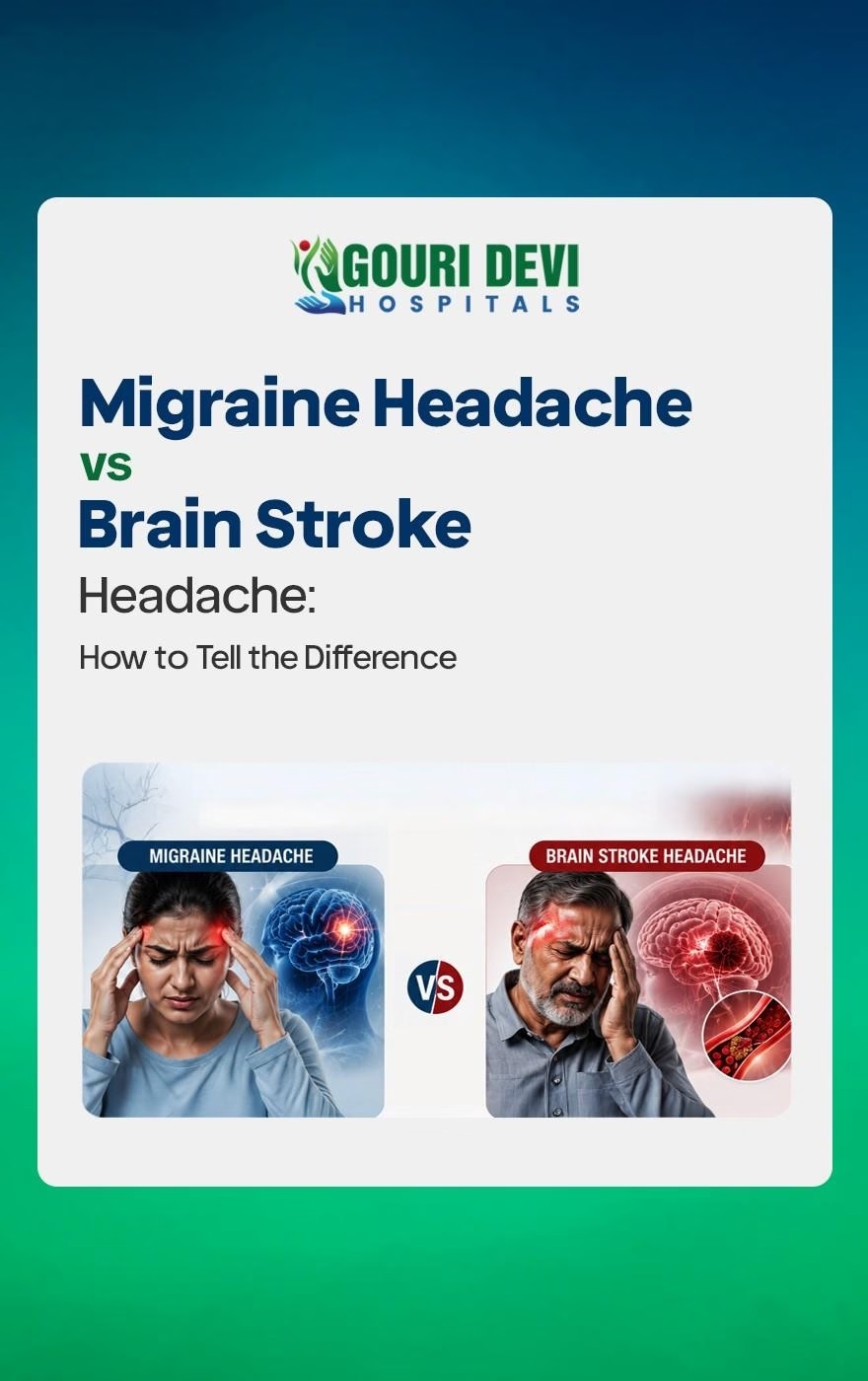
Your head is pounding. The pain is bad. Really bad.
And in the back of your mind a question appears. Is this just a migraine headache? Or is something more serious happening inside my brain right now?
This question matters a lot. Because a migraine headache and a stroke headache can sometimes feel similar enough to confuse. But one of them is a medical emergency that needs treatment within minutes. The other needs rest and medication.
Getting that difference wrong can cost someone their life. Or leave them permanently disabled.
This blog is going to explain the difference in headaches clearly and simply. With the information you need to make the right call when your head is hurting badly.
What Is a Migraine Headache and Why Does It Happen?
A migraine headache is not just a bad headache. It is a neurological condition. That means it involves the brain and the nervous system, not just the head.
During a migraine headache the brain becomes unusually sensitive. Blood vessels in the brain expand. Chemicals are released that cause inflammation around the nerves. The result is a throbbing, often one-sided headache that can last anywhere from 4 hours to 72 hours.
Migraine headache symptoms include:
- A throbbing or pulsing pain, usually on one side of the head
- Pain that gets worse when you move around, bend down or climb stairs
- Feeling sick to the stomach or actually vomiting
- Extreme sensitivity to light. Even a dim room feels too bright
- Extreme sensitivity to sound. Normal conversation feels unbearable
- Sensitivity to smells
The pain is usually moderate to severe in intensity.
What causes frequent headaches like migraines:
- Triggers are things that set off a migraine headache in people who are prone to them.
- Common triggers include bright or flickering lights, strong smells, certain foods like aged cheese and processed meats, alcohol especially red wine, skipping meals, dehydration, hormonal changes in women around their period, too much or too little sleep, stress and weather changes.
- The cause of frequent headaches in migraine sufferers is often a combination of genetic sensitivity and repeated exposure to these triggers.
What Is an Aura Headache and What Does It Mean?
About one in three people with migraine headache experience something called an aura before the headache begins.
An aura headache is a migraine headache that comes with specific warning signs that appear 20 to 60 minutes before the pain starts.
Aura symptoms include:
- Seeing flashing lights, zigzag lines or blind spots in the vision
- Tingling or numbness on one side of the face or in one hand
- Difficulty finding words or speaking clearly for a short time
- A feeling of pins and needles moving slowly up the arm
Here is the important thing about aura headache symptoms. Some of them look very similar to early stroke symptoms. This is one of the reasons people get confused between migraine headache and stroke. We will come back to this shortly because it is critical.
An aura headache is not dangerous on its own. But it does need proper medical diagnosis to confirm that it is migraine aura and not something else.
What Does a Stroke Headache Feel Like?
A stroke happens when blood supply to part of the brain is suddenly cut off. Either a blood clot is blocking a vessel or a blood vessel has burst inside the brain.
When a stroke involves a burst blood vessel it is called a haemorrhagic stroke. This type of stroke produces what doctors and patients describe in a very specific way.
It is called a sudden painful headache and it is unlike anything most people have felt before.
How stroke headache patients describe it:
- The worst headache of my entire life
- Like someone hit me in the back of the head with a bat
- Like a thunderclap going off inside my head
- It came from nowhere with full force in under a second
Other symptoms that appear together:
- Sudden weakness or numbness on one side of the face, arm or leg
- Sudden confusion or difficulty understanding words
- Sudden trouble seeing out of one or both eyes
- Sudden dizziness, loss of balance or inability to walk
- Sudden difficulty speaking or slurred speech, drooping of face
This sudden painful headache is called a thunderclap headache by doctors. It reaches maximum intensity within 60 seconds of starting. Sometimes within seconds.
If a headache arrives like a thunderclap and comes with any of these symptoms, this is a medical emergency. Call for emergency help immediately. Do not drive yourself. Do not wait to see if it passes.
Migraine Headache vs Stroke Headache: The Key Differences
This is the most important section of this blog. Read it carefully and consider saving it or sharing it.
| Feature | Migraine Headache | Stroke Headache |
|---|---|---|
| How it starts | Builds up gradually over minutes to hours | Starts suddenly and reaches full intensity within seconds |
| Type of pain | Throbbing, pulsing, usually one-sided | Explosive, crushing, described as the worst headache ever |
| Previous history | Usually has a history of similar headaches | Often the first time this type of headache has occurred |
| Warning signs | May have aura like visual disturbances or tingling | Little or no warning before the headache hits |
| Other symptoms | Nausea, vomiting, light and sound sensitivity | Weakness on one side, speech problems, vision loss, confusion, face drooping |
| How long it lasts | 4 to 72 hours | Persists and often worsens without treatment |
| What helps | Dark quiet room, migraine medication, sleep | Nothing helps at home. Needs emergency hospital treatment |
| Risk to life | Not life-threatening | Potentially life-threatening within hours |
Difference in Headaches: When Should You Be Worried?
Not every headache needs a trip to the emergency room. But some absolutely do.
Go to the emergency room immediately if:
- The headache hit suddenly like a thunderclap and is the worst you have ever felt
- Headache and stroke symptoms appear together. Weakness, slurred speech, vision changes, face drooping, confusion
- The headache comes with a stiff neck and fever which could indicate meningitis
- The headache follows a head injury or fall
- The headache woke you up from sleep with sudden severe intensity
- You are over 50 and this is a new type of headache you have never experienced before
- The headache is accompanied by confusion or memory problems
- Vision loss occurs at the same time as the headache
See a doctor soon if:
- Your migraine headache is lasting longer than 72 hours without relief
- Migraine headache symptoms are changing in character from what you normally experience
- You are having a long-lasting headache that has been present for more than a week
- The cause of frequent headaches is increasing. You are getting headaches more often
- Over-the-counter medication has stopped working for your usual headaches
Do not ignore:
- Any new headache that feels different from headaches you have had before
- Severe headache reasons that you cannot explain or link to a known trigger
- Any headache combined with neurological symptoms no matter how mild
Migraine Headache Symptoms That Can Look Like a Stroke
This is where things get genuinely confusing and where mistakes happen.
Some migraine headache symptoms, particularly in aura headache, look remarkably like early stroke symptoms.
Symptoms that overlap:
- Temporary vision disturbance or partial vision loss
- Tingling or numbness on one side of the face or body
- Difficulty speaking or finding words
- Weakness in the arm on one side
The critical difference when comparing migraine aura to stroke:
- In migraine aura, these symptoms spread slowly over 20 to 30 minutes and then gradually go away before or as the headache begins. A visual disturbance typically starts as a small spot and slowly expands outward over several minutes.
- In stroke, symptoms come on suddenly and completely without any gradual build. They do not resolve on their own. They stay or get worse.
There is also a condition called hemiplegic migraine where a migraine headache causes temporary weakness on one side of the body that can look exactly like a stroke. This is rare but real. People with hemiplegic migraine must always be properly diagnosed by a neurologist to confirm it is not a stroke.
The rule is simple. If you are unsure whether neurological symptoms are migraine aura or stroke, treat it as a stroke and get emergency help immediately. Better to be wrong about it being a stroke than to miss one.
Cause of Sudden Headaches: What Else Can Cause a Thunderclap Headache?
A thunderclap headache, meaning a sudden painful headache that hits maximum intensity within 60 seconds, is not always a stroke. But it is always serious.
Other causes that need urgent evaluation:
- Subarachnoid haemorrhage: Bleeding around the surface of the brain. Often from a burst aneurysm. This is life-threatening and causes the classic thunderclap headache and stroke presentation.
- Cerebral venous sinus thrombosis: A blood clot in the veins of the brain that can cause sudden severe headache.
- Hypertensive crisis: Blood pressure that has shot up to extremely dangerous levels, above 180/120, can cause sudden severe headache.
- Reversible cerebral vasoconstriction syndrome (RCVS): A condition where the brain's blood vessels suddenly spasm, causing thunderclap headaches that recur over days or weeks.
- Meningitis: Infection of the brain's protective covering causes severe headache with stiff neck and fever.
All of these are medical emergencies. The cause of sudden headaches that arrive like a thunderclap should never be assumed to be benign without proper medical evaluation.
Severe Headache Reasons: What Puts You at Higher Risk of Stroke Headache?
Understanding your personal risk helps you take the right headache more seriously.
Risk factors for stroke include:
- High blood pressure (the single biggest risk factor for haemorrhagic stroke)
- Diabetes and High cholesterol
- Smoking or Being overweight
- Heart disease or irregular heartbeat like atrial fibrillation
- History of previous mini-strokes or TIAs (transient ischaemic attacks)
- Age above 55 and Family history of stroke
- Women taking the oral contraceptive pill, particularly those who also experience aura headache
If you have several of these risk factors and develop a sudden painful headache that feels different from your usual headaches, do not try to manage it at home. Go to the hospital.
What Is a Long Lasting Headache and When Does It Become Dangerous?
A long-lasting headache is defined medically as a headache that persists for more than 15 days per month. In migraine headache sufferers this is called chronic migraine and it needs specialist management.
But a long-lasting headache becomes dangerous when:
- It is a new type of headache that has not occurred before
- It is progressively getting worse over days or weeks
- It is accompanied by morning vomiting, vision problems or personality changes which can suggest raised pressure inside the skull
- It does not respond to any medication at all
- It wakes the person from sleep repeatedly
A long-lasting headache that keeps getting worse is never something to ignore. It needs investigation by a doctor.
How Is Migraine Headache Diagnosed and Treated?
Diagnosis of Migraine
There is no blood test or scan that diagnoses migraine headache directly. Diagnosis is based on the pattern of symptoms. A doctor will ask:
- How often do the headaches happen & how long do they last
- What migraine headache symptoms come with the pain
- Whether there is aura
- What makes them better or worse
- Family history of migraine headache
Brain scans like MRI or CT may be done to rule out other severe headache reasons before confirming migraine.
Treatment of Migraine
During an attack:
- Triptans are the most effective medications for stopping a migraine
- Anti-nausea medications
- Rest in a dark quiet room, cold compress, hydration
Preventive treatment:
- Daily medications (beta blockers, topiramate, amitriptyline, CGRP inhibitors)
- Identifying and avoiding personal triggers
How Is a Stroke Headache Treated?
This is fundamentally different from migraine headache treatment.
A stroke is a medical emergency that needs hospital treatment within hours. In the case of an ischaemic stroke where a clot is blocking blood flow, there is a critical treatment window. The clot-busting medication tPA must be given within 4.5 hours of stroke symptoms starting to be effective.
Every minute without treatment means more brain cells are dying. This is where the phrase "time is brain" comes from.
Treatment depends on the type of stroke:
- Ischaemic stroke (clot blocking blood flow): Clot-dissolving medication, blood thinners, and in some cases a procedure to physically remove the clot from the artery.
- Haemorrhagic stroke (bleeding in the brain): Controlling blood pressure, stopping any blood thinners, and sometimes surgery to relieve pressure or repair the bleeding vessel.
There is no home remedy for stroke. No painkiller that helps. No rest that fixes it. The only treatment is hospital treatment started as fast as possible.
Quick Reference: Migraine or Stroke? Use F.A.S.T.
When someone has a sudden severe headache with other symptoms, use the FAST check immediately.
F
Face. Ask them to smile. Does one side of the face droop?
A
Arms. Ask them to raise both arms. Does one drift downward?
S
Speech. Ask them to repeat a simple sentence. Is their speech slurred or strange?
T
Time. If any of these are yes, it is time to call emergency services immediately.
Do not drive the person yourself. Do not wait to see if symptoms improve. Do not give food or water. Call for emergency help and keep the person calm and still until help arrives.
One Final Word
A migraine headache is painful and disruptive and deserves proper treatment and management.
A stroke headache is a life-threatening emergency that needs immediate hospital care.
The difference in headaches between these two comes down to a few key things. How it starts. How fast it reaches full intensity. What other symptoms come with it. And whether it is the worst headache the person has ever experienced.
Learn these signs. Share them with your family. Because in the moment when someone's head is in agony, knowing the difference between a migraine headache and a stroke can be the difference between full recovery and permanent damage.
At Gouri Devi Institute of Medical Sciences and Hospital, our neurology team manages both migraine headache and stroke emergencies. If you have been experiencing cause of frequent headaches, severe headache reasons that worry you, or any headache that felt different or more serious than usual, please come in for an evaluation.