
Silent Damage: How Chronic Kidney Disease and Hypertension Are Destroying Each Other Inside Your Body
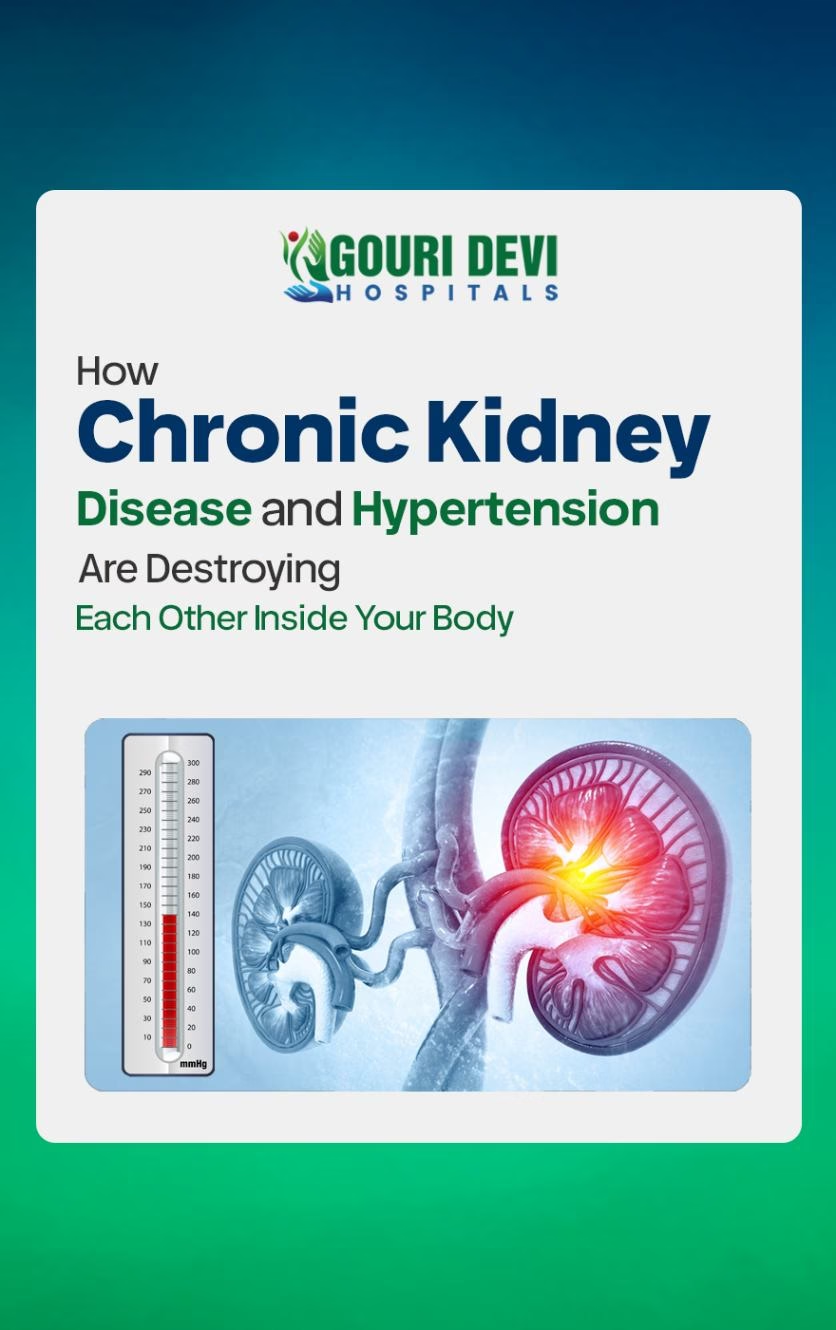
Most people know high BP is bad for the heart. Far fewer people know what it is quietly doing to their kidneys at the same time.
Here is the problem. Chronic kidney disease and hypertension have a relationship that goes both ways. High blood pressure damages the kidneys. And damaged kidneys make blood pressure go even higher. Round and round it goes, each one making the other worse, until the kidneys are in serious trouble.
The scariest part? Most people feel nothing until a lot of damage has already been done.
This blog is going to explain exactly what is happening inside your body, in plain simple language, so you can understand why taking your blood pressure seriously is about a lot more than just your heart.
What Does High Blood Pressure Actually Do to the Kidneys?
Think of your kidneys like a very fine filter. Thousands of tiny blood vessels run through them, cleaning your blood all day and all night without stopping.
Now imagine pushing water through that filter at too high a pressure. Day after day. Month after month. Year after year.
Those tiny blood vessels start to get damaged. They stretch. They thicken. They stiffen. And once those tiny vessels are damaged, the filter stops working as well as it should. This is exactly what hypertension and kidney damage looks like on the inside.
- High blood pressure puts extra force on the walls of every blood vessel in the kidneys
- Over time that force scars and hardens the vessels
- When the vessels are damaged, the kidney's filtering units, called nephrons, do not get enough good blood supply
- The nephrons slowly stop working
- Dead nephrons do not come back ever
- The kidneys shrink in size as more and more nephrons are lost
This is how hypertension and kidney function slowly falls apart. Not dramatically. Not quickly. Just quietly and steadily over months and years.
How Do the Kidneys and Blood Pressure Actually Control Each Other?
This is the part that most people do not know and it is really important to understand. Your kidneys and your blood pressure are connected in a two-way system.
The kidneys help control blood pressure by:
- Controlling how much water and salt stays in the body. More water and salt means higher blood pressure.
- Releasing a hormone called renin when they sense low blood flow. Renin triggers a chain reaction that raises blood pressure.
- Filtering waste from the blood. When the blood is clean and well-balanced, blood pressure stays stable.
High blood pressure damages the kidneys by:
- Injuring the tiny blood vessels inside them as described above.
- Reducing blood flow to the filtering units.
- Causing protein to leak into the urine, which is a sign the filter is breaking down.
So when blood pressure is high for a long time, the kidneys get damaged. And when the kidneys are damaged, they start releasing more renin and holding onto more salt and water. This pushes blood pressure even higher.
Chronic kidney disease and hypertension trap each other in this vicious cycle. Breaking that cycle is the whole goal of treatment.
What Are the Symptoms of Hypertension and Kidney Damage?
Here is the really dangerous part about high bp and kidney function problems. In the early and middle stages, there are usually no symptoms at all. Both high blood pressure and early kidney disease are called silent conditions for exactly this reason.
But as hypertension and kidney damage progresses, some signs begin to appear:
- Swelling in the feet, ankles or around the eyes. This happens because the kidneys are holding onto extra fluid instead of filtering it out.
- Foamy or bubbly urine. This means protein is leaking through the damaged kidney filter into the urine.
- Urinating less than usual. The kidneys are not producing as much urine because their function has dropped.
- Feeling very tired all the time. Waste products build up in the blood when the kidneys cannot filter properly and this makes everything feel harder.
- Headaches and difficulty concentrating. Both from the high blood pressure itself and from waste in the blood.
- Shortness of breath. Fluid builds up in the lungs when the kidneys cannot remove excess water from the body.
- Nausea and loss of appetite. Waste products in the blood cause a feeling of sickness that does not go away.
If you have high blood pressure and notice any of these things, please see a doctor immediately. Do not wait.
How Is Chronic Kidney Disease and Hypertension Diagnosed?
Diagnosis is straightforward. It requires blood tests and urine tests. Nothing painful or complicated.
Tests that check kidney function:
- Serum Creatinine: A waste product the kidneys should filter out. Buildup means the kidneys are not doing their job.
- eGFR: Calculated from creatinine. A number above 90 is normal. Below 60 means kidney disease. Below 15 means kidney failure.
- Blood Urea Nitrogen (BUN): Another waste product that builds up when function falls.
Tests checking damage from High BP:
- Urine protein test: Healthy kidneys keep protein in the blood. Damaged ones let it leak.
- Urine ACR: A more sensitive test catching early protein leakage.
- Kidney ultrasound: Shows the size and structure. Damaged kidneys from long-term high BP are often smaller.
For blood pressure monitoring: Regular BP readings at home and at the clinic, plus 24-hour ambulatory blood pressure monitoring in some cases to see the full picture.
Anyone with high blood pressure should have these kidney function tests done at least once a year. Every year. Without missing.
What Is the Connection Between High Blood Pressure with Kidney Disease and Protein in Urine?
Protein in the urine has a special name. It is called proteinuria. And it is one of the most important warning signs of high blood pressure with kidney disease.
Here is why it happens:
- Healthy kidneys have a very fine filter that keeps large molecules like protein in the blood where they belong
- When hypertension and kidney damage occurs, that filter develops holes
- Protein, especially one called albumin, starts slipping through those holes into the urine
- Protein in the urine is not just a sign of damage. It also actively makes the damage worse
- Protein leaking through the filter irritates and scars the kidney tissue further, speeding up the loss of function
This is why doctors check urine protein so regularly in patients with hypertension and kidney function problems. It is both a diagnostic tool and a way of tracking whether treatment is working. If your urine looks foamy or bubbly, particularly in the morning, tell your doctor. That foam is often a sign of protein where it should not be.
Can High BP and Kidney Function Problems Lead to Kidney Failure?
Yes. Directly and clearly, yes.
Kidney failure hypertension is one of the leading causes of end-stage kidney disease in India and globally. Here is how the progression typically works if chronic kidney disease and hypertension are left unmanaged:
- High blood pressure stays uncontrolled for months or years
- The tiny blood vessels in the kidneys get progressively scarred and damaged
- Kidney function drops slowly through the stages of chronic kidney disease
- More nephrons are lost and cannot be replaced
- Eventually the kidneys reach a point where they can no longer filter enough blood to keep the body working
- This is called end-stage kidney disease or kidney failure hypertension
- At this point the patient needs dialysis or a kidney transplant to survive
The journey from normal kidneys to kidney failure because of uncontrolled high blood pressure typically takes years or even decades. That is both the frightening part and the hopeful part. There is time to stop it if action is taken early enough.
How Is Hypertension and Kidney Disease Treated?
Treatment has two goals that work together. Bring the blood pressure down. Slow down the kidney damage.
Blood pressure targets for kidney patients:
For most patients with high blood pressure with kidney disease the target blood pressure is below 130/80 mmHg. For patients with protein in their urine the Blood pressure target may be even lower. Hitting and staying at the target blood pressure is the single most important thing a patient can do.
Medications commonly used:
- ACE inhibitors and ARBs are the most important medications. They lower blood pressure and also specifically protect the kidneys by reducing pressure inside the tiny kidney blood vessels and reducing protein leakage.
- Diuretics help the kidneys remove extra fluid and salt from the body, which lowers blood pressure and reduces swelling.
- Calcium channel blockers help relax the blood vessel walls and are often used alongside ACE inhibitors or ARBs.
- Beta blockers reduce the heart rate and blood pressure and are used when other medications alone are not enough.
Diet changes that help:
- Reduce salt drastically. Salt makes the body hold onto water and raises blood pressure directly. Aim for less than 2 grams of sodium per day (roughly half a teaspoon of salt total).
- Reduce protein intake. Too much protein creates more waste for the kidneys to filter.
- Control potassium and phosphorus. As kidney function drops, the kidneys cannot remove these properly. High levels cause serious heart and bone problems.
- Limit fluids if the doctor advises it, especially in more advanced stages.
Lifestyle changes that make a real difference:
- Stop smoking completely. Smoking damages blood vessels directly and makes hypertension and kidney damage significantly worse.
- Exercise regularly but gently. Walking for 30 minutes a day helps lower blood pressure naturally.
- Lose weight if overweight. Even losing five to ten kilograms can bring blood pressure down measurably.
- Manage stress. Chronic stress keeps blood pressure elevated. Simple breathing exercises and adequate sleep contribute to better control.
What Foods Are Bad for Chronic Kidney Disease and Hypertension?
Food choices directly affect both blood pressure and kidney function. These are the ones to be most careful about:
- Salt and salty foods. Pickles, papads, processed snacks, instant noodles, packaged soups and most restaurant food is loaded with hidden salt.
- Red meat in large amounts. Creates more waste products that stressed kidneys struggle to clear.
- Bananas, oranges and potatoes in large amounts if blood potassium is already high.
- Dairy products, nuts and cola drinks if blood phosphorus is already high.
- Alcohol. Raises blood pressure directly and puts extra strain on the kidneys.
- NSAIDs like ibuprofen and diclofenac. These common painkillers reduce blood flow to the kidneys and can dramatically worsen both high bp and kidney function and kidney disease. Never take these without telling your doctor you have kidney problems.
How Often Should You Get Your Kidneys Checked If You Have High BP?
If you have high blood pressure and have never had your kidneys checked, the answer is simple. Get checked now.
After that initial check, here is the general guidance for monitoring hypertension and kidney function:
- Every 6 months if kidney function is normal but blood pressure has been high for a long time
- Every 3 months if there is already some kidney disease present
- Every 1 to 3 months if kidney disease is moderate to severe and treatment is being adjusted
- At every clinic visit if the patient is in advanced stages of chronic kidney disease and hypertension
Tests to repeat regularly include serum creatinine, eGFR, urine protein, potassium and blood pressure readings at home every day.
Home blood pressure monitoring is particularly important. Blood pressure at home is often more accurate than readings taken at a clinic where some people get nervous and their readings go artificially high.
Can Hypertension and Kidney Damage Be Reversed?
This is the question everyone wants answered. Honestly.
Partially yes. But mostly the goal is to stop more damage from happening rather than reverse what has already occurred. Here is the reality:
- Kidney tissue that has already been scarred does not regenerate. Damaged nephrons do not come back.
- However, stopping the high blood pressure from causing further damage can slow the progression of kidney disease dramatically.
- Some patients who bring their blood pressure under tight control see their kidney function stabilise for many years.
- Protein leakage into the urine can reduce significantly with the right medication, which means less ongoing damage to the filter.
- Patients in the early stages of chronic kidney disease and hypertension who take their treatment seriously have a very good chance of never reaching kidney failure.
The earlier treatment starts, the more kidney function can be saved. This is not a situation where waiting makes things easier. Every month of uncontrolled high bp and kidney function damage is a month of nephrons that will not come back.
A Final Word
Chronic kidney disease and hypertension do not announce themselves loudly. They work quietly in the background for years while most people feel completely normal. By the time symptoms appear, a significant amount of damage has often already happened.
The good news is that this damage is largely preventable. Check your blood pressure. Get your kidneys tested. Take your medications consistently. Eat less salt. And if your Urologist says your kidney numbers are changing, act on it immediately.
At Gouri Devi Institute of Medical Sciences and Hospital, our nephrology and cardiology teams work together to manage hypertension and kidney disease in patients across this region like Durgapur, Burdwan, Asansol, Raniganj. If you have been living with high blood pressure for years and have never had a proper kidney function check done, please come in. One appointment can tell you exactly where you stand.
Do not wait for symptoms. By then, the kidneys have already been working overtime for a long time.