
Can Hemiplegia Improve? Get Everything About Treatment and Recovery
Life can change in just a few minutes. A healthy, active person may suddenly lose the ability to move one side of the body, making everyday tasks like walking, eating, or speaking extremely difficult. This condition is called hemiplegia.
It is frightening. For the person going through it and for the family watching it happen. But here is something important to know from the very beginning. Hemiplegia is not the end of the road.
With the right treatment started at the right time, real recovery is possible. How much recovery possible depends on many things but the single biggest factor is how quickly treatment begins.
This blog explains everything you need to know. Simply. Clearly. No complicated medical language.
What Is Hemiplegia Paralysis?
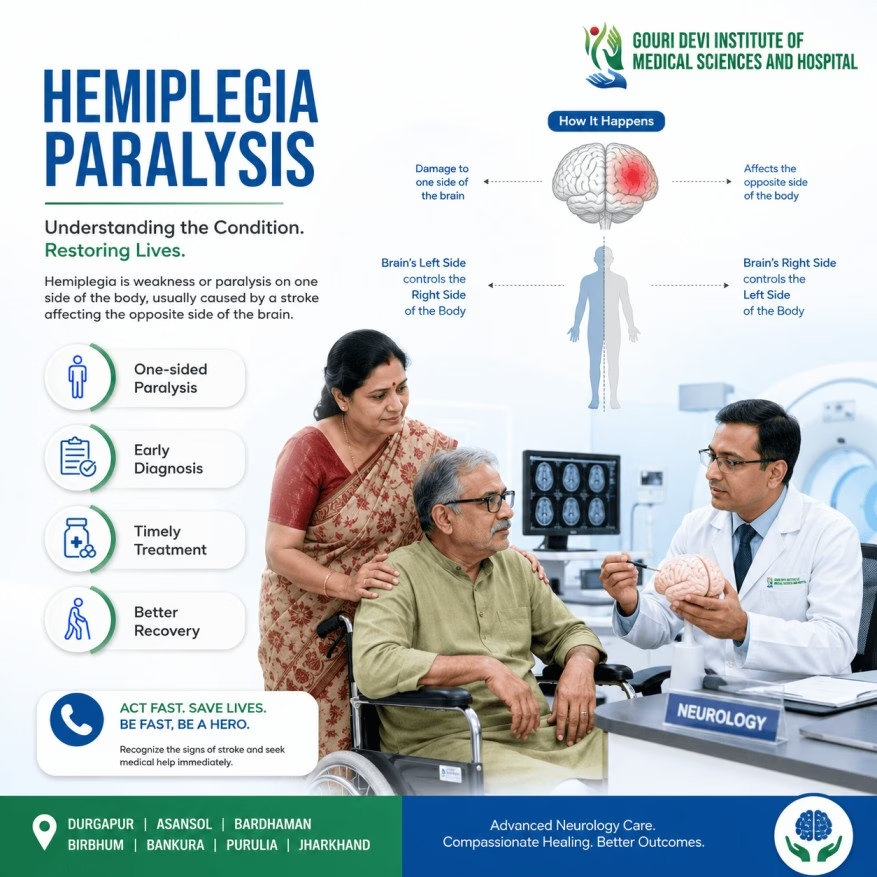
Hemiplegia means paralysis on one side of the body.
The word itself tells you exactly what it means. Hemi means half. Plegia means paralysis. So hemiplegia paralysis is when one complete side of the body, one arm, one leg, sometimes one side of the face, loses its ability to move normally.
Here is something that surprises most people. When the left side of the brain is damaged, it is the right side of the body that gets affected. When the right side of the brain is damaged, it is the left side of the body that stops working properly. This is called contralateral hemiplegia. Contralateral simply means the opposite side.
Contralateral hemiplegia happens because the brain's nerve pathways cross over as they travel down to the body. So a stroke on the right side of the brain causes hemiplegia left side of the body and vice versa.
Hemiplegia can also affect children. A baby can be born with it or develop it in the first two years of life. In children it is often called congenital hemiplegia and the causes are different from adults.
Common Causes of Hemiplegia Paralysis in Adults and Children
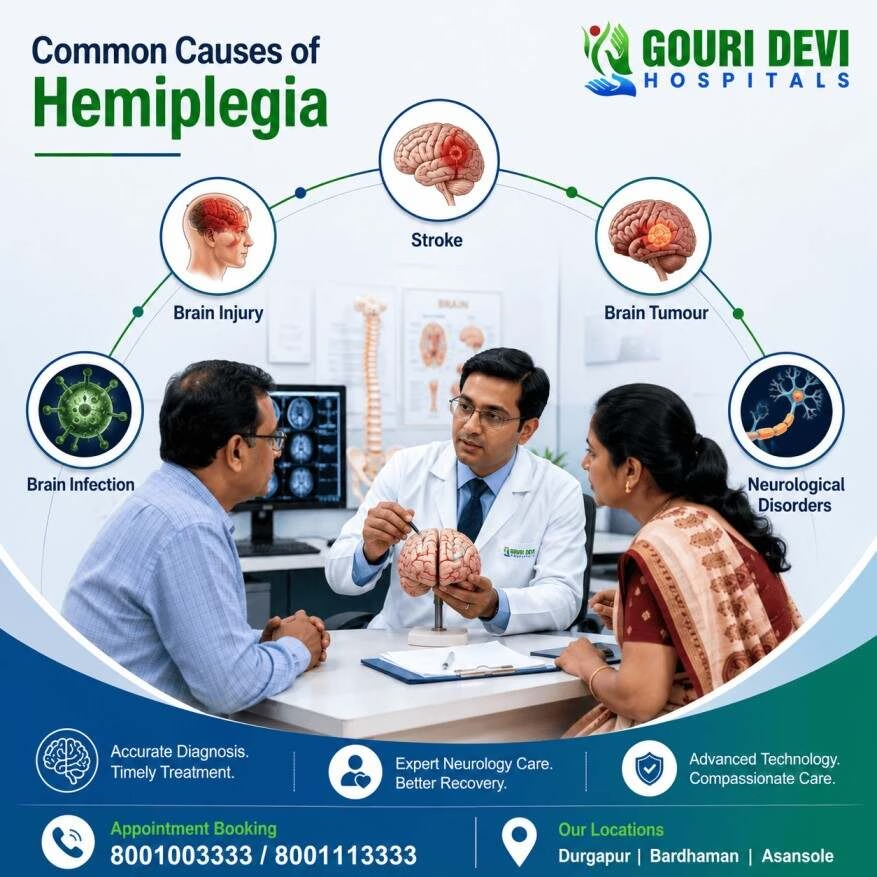
Hemiplegia does not happen randomly. Something specific damages the brain or spinal cord and that damage stops the signals from reaching one side of the body.
Causes in Adults
- Stroke: This is the biggest cause of hemiplegia. A stroke either blocks blood flow to part of the brain or causes bleeding inside the brain. Both damage brain cells rapidly.
- Brain injury: A serious accident, a fall or a blow to the head can damage the part of the brain that controls movement.
- Brain tumour: A tumour pressing on or growing in the motor areas of the brain can cause progressive hemiplegia paralysis.
- Brain infection: Conditions like encephalitis or meningitis can inflame the brain and cause movement loss on one side.
- Multiple sclerosis: This disease damages the nerve coverings in the brain and spinal cord and can cause hemiplegia in some patients.
Causes in Children
- Lack of oxygen: Oxygen deprivation to the brain during birth.
- Brain bleeding: Bleeding inside the brain of a premature baby.
- Early stroke: A stroke that happens before or shortly after birth.
- Maternal infections: Infections during pregnancy that affect brain development.
What Is the Difference Between Hemiplegia and Hemiparesis Recovery Timelines?
People often confuse these two conditions. They are related but not the same thing.
- Hemiplegia means complete or very severe paralysis on one side. The muscles have little or no movement at all.
- Hemiparesis means weakness on one side. Movement is still there but it is reduced, slower and harder to control.
The recovery timeline difference:
- Hemiparesis patients generally recover faster because some nerve pathways are still working. With hemiplegia therapy many hemiparesis patients regain close to normal function within weeks to months.
- Hemiplegia paralysis recovery takes longer and requires more intensive therapy because the damage is more severe.
- Both conditions benefit enormously from early treatment. The earlier hemiplegia treatment begins, the better the recovery for both.
- A person with hemiplegia can sometimes progress to hemiparesis during recovery as nerve pathways begin to rewire themselves. This is a positive sign and means the treatment is working.
Why Is Early Intervention So Important for Hemiplegia Recovery?
This is the most important section in this entire blog. Please read it carefully.
The brain has an amazing ability. It can rewire itself. It can build new connections around damaged areas and gradually teach other parts of the brain to take over the jobs that the damaged part used to do. Doctors call this neuroplasticity.
But here is the critical thing about neuroplasticity. It works best in the early weeks and months after injury. The brain is at it’s most ready to rewire itself right after the damage happens. This window of high neuroplasticity does not last forever.
This is why the timing of hemiplegia treatment makes such a massive difference to the final outcome.
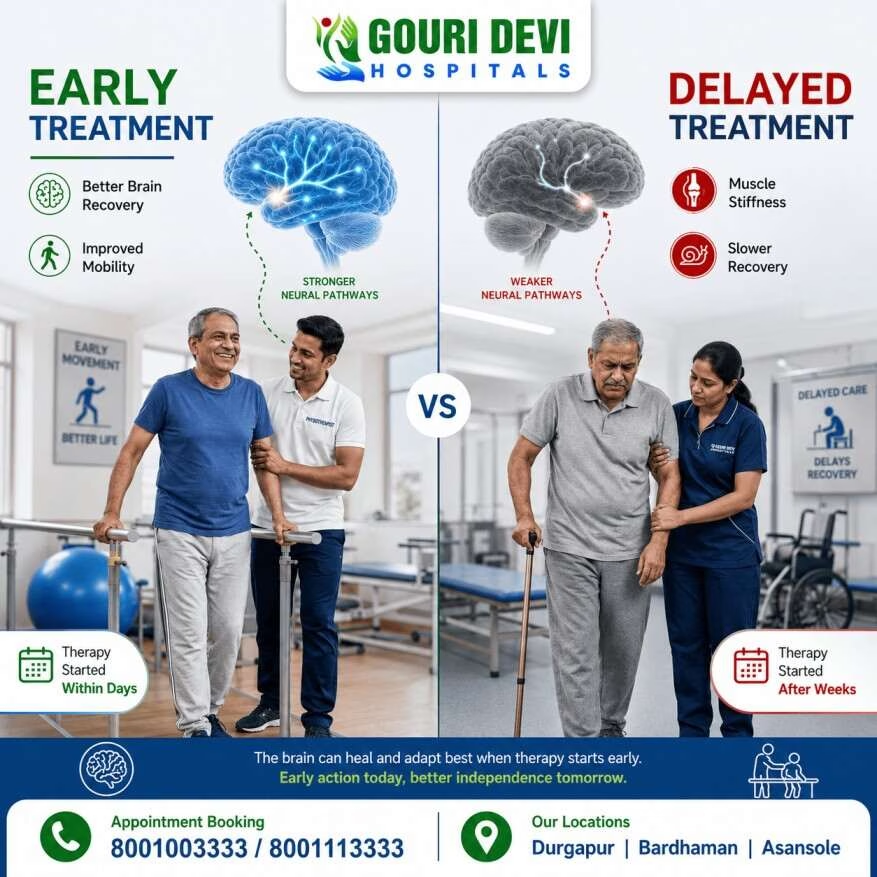
When Treatment Starts Early:
- The brain gets the right stimulation at the right time to start building new pathways
- Muscles on the affected side do not have time to fully weaken and waste away
- Stiffness and tightening of the muscles, called spasticity, is prevented or reduced early before it becomes a bigger problem
- The patient learns to move and function again while the brain is still in its most responsive state
- Depression and loss of hope, which are very common after hemiplegia and stroke, are less likely when the patient sees early progress
When Treatment Is Delayed:
- The brain's best window for rewiring begins to close
- Muscles weaken further from not being used
- Spasticity and joint stiffness set in and become harder to treat
- Recovery becomes slower, harder and less complete
The first 90 days after a stroke or brain injury are the most important period for hemiplegia paralysis recovery. But improvement can still happen for months and years after that with the right hemiplegia therapy.
Immediate Benefits of Starting Hemiplegia Treatment After a Stroke
When hemiplegia treatment begins within the first few days after a stroke, here is what starts to happen:
- Blood circulation to the affected muscles improves
- The risk of blood clots in the legs for not moving is reduced
- The brain begins receiving movement signals that encourage it to start rewiring
- Shoulder joints and other joints are protected from painful dislocations that happen when paralysed limbs are not properly supported
- Swallowing problems, which are common after stroke, are identified and managed early before they cause chest infections
- Breathing stays strong and chest complications are reduced
- The patient starts feeling some control over their situation which dramatically helps their mental state
Every day of early hemiplegia therapy is worth more than a week of therapy started months later.
Physical Therapy vs Occupational Therapy for Hemiplegia
Both are essential. They work on different things and together they give the best results.
Physical Therapy
- Focuses on helping the patient move again. Walking, balance, strength and coordination
- Works on the large movements, standing up from a chair, walking across a room, climbing stairs
- Uses exercises, hands-on techniques and specialized equipment to stimulate the affected side
- Helps reduce spasticity in the arm and leg
- Is usually the first type of hemiplegia therapy to begin, often within days of the stroke or injury
Occupational Therapy
- Focuses on helping the patient do everyday tasks again. Getting dressed, eating, bathing, writing
- Works on fine movements, the small precise actions that hands and fingers need to do daily tasks
- Teaches patients how to adapt tasks when full movement does not return
- Recommends equipment like special cutlery, dressing aids and bathroom grab rails to help the patient be more independent
- Is just as important as physical therapy for quality of life
Think of it this way. Physical therapy gets you back on your feet. Occupational therapy gets you back to your life.
Constraint-Induced Movement Therapy for Hemiplegia
This is one of the most effective and well-researched approaches in hemiplegia therapy. The concept is surprisingly simple.
Constraint-induced movement therapy or CIMT works by putting the unaffected arm in a special glove or sling for most of the day. This forces the patient to use the affected arm for daily tasks instead of relying on the good arm.
Why does this work?
- After hemiplegia and stroke the brain tends to ignore the affected side and let the good side do all the work. This is called learned non-use.
- CIMT breaks the habit of learned non-use by taking the good arm out of the equation.
- The brain is forced to start using the damaged pathways again and this stimulates new connections to form.
- Research shows that patients doing CIMT gain significantly better arm and hand function compared to standard therapy alone.
CIMT works best for patients who have some small movement already returning in the affected arm. It is intensive and requires commitment but the results are well documented.
What Are the Stages of Recovery from Hemiplegia Paralysis?
Hemiplegia paralysis recovery does not happen all at once. It follows a general pattern that most patients go through. Understanding these stages helps patients and families know what to expect.
- Flaccidity: The affected side is completely limp and has no muscle tone at all. This is the immediate phase right after the injury.
- Spasticity Begins: Some muscle tone returns but it is too high. The muscles become stiff and tight. The arm may pull inward. The leg may become rigid. This is actually a positive sign that the nervous system is waking up.
- Spasticity at Its Peak: Stiffness is at its maximum. Movement patterns start appearing but they are not yet controlled well. The patient may be able to move the whole arm but not individual fingers yet.
- Spasticity Decreasing: The stiffness begins to reduce. Movements become more varied and more controlled. Individual movements start to separate from group movements.
- Complex Movements Returning: More complex and coordinated movements become possible. The patient can do more precise tasks with the affected hand and move the affected leg more naturally.
- Fine Motor Control: Individual finger movements improve significantly. Walking becomes closer to normal. This is the stage most patients aim for thorough consistent hemiplegia therapy.
- Normal or Near Normal Function: Some patients reach this stage. It depends on the severity of the original injury and how early and consistently hemiplegia treatment was received.
Not every patient reaches Stage 7. But every patient who receives early, consistent hemiplegia therapy moves further along these stages than those who do not.
Speech and Language Therapy for Hemiplegia Patients
Hemiplegia and stroke often affect more than just movement. When the stroke happens on the left side of the brain, speech and language are frequently affected too because the left brain controls language in most people.
Problems that speech therapy addresses:
- Aphasia: Difficulty finding words, understanding speech or putting sentences together.
- Dysarthria: The mouth muscles are weak so speech sounds slurred or unclear.
- Dysphagia: Difficulty swallowing safely which is common after stroke and can cause food or liquid to go into the lungs.
What speech therapy actually involves:
- Exercises to strengthen the mouth, tongue and throat muscles
- Practising speaking, reading and understanding in structured sessions
- Learning alternative ways to communicate when speech is very difficult
- Safe swallowing techniques and advice on food texture to prevent choking
Speech therapy is a core part of hemiplegia treatment and should begin as early as physical and occupational therapy. Do not wait for movement to improve before starting speech therapy.
Daily Home Exercises for Hemiplegia Recovery for Seniors
Recovery does not stop when the patient leaves the hospital or therapy centre. What happens at home every day matters enormously.
Safe exercises seniors can do at home with guidance from their therapist:
- Passive range of motion: A carer gently moves the affected arm and leg through their full range of movement. This keeps joints flexible and sends signals to the brain even when the patient cannot move independently.
- Mirror therapy: The patient moves the good hand in front of a mirror while watching the reflection. The brain sees what looks like the affected hand moving and this stimulates recovery in the affected side.
- Grip exercises: Squeezing a soft ball or sponge with the affected hand for short sessions multiple times a day.
- Seated leg exercises: Lifting the affected knee while sitting, straightening the leg slowly and lowering it. Builds leg strength safely.
- Weight shifting: While sitting, gently shifting body weight from side to side. This improves balance and core stability.
- Finger stretching: Gently opening and stretching the fingers of the affected hand several times a day to prevent stiffness.
Always get exercises approved by the treating therapist before starting. What is right for one patient may not be right for another.
Caregiver Guide for Supporting Hemiplegia Rehabilitation at Home
Caregivers are a huge part of hemiplegia paralysis recovery. The right support at home can make the difference between steady progress and getting stuck.
Practical Tips for Caregivers:
- Encourage independence, not dependence. The natural instinct is to do everything for the patient. Resist this. Let the patient try tasks even if it takes longer. The struggle is part of the brain rewiring process.
- Keep the routine consistent. Do exercises at the same time every day. Consistency is more important than intensity.
- Position the affected side correctly. Whether sitting or lying down, the affected arm and leg need to be properly supported to prevent shoulder dislocation and joint damage.
- Communicate clearly and patiently. If the patient has speech difficulties, give them time to respond. Do not finish their sentences. Do not pretend to understand when you do not.
- Watch for depression. Depression after hemiplegia and stroke is very common and very treatable. If the patient seems withdrawn, hopeless or constantly sad, tell the doctor.
- Take care of yourself too. Caregiver burnout is real. You cannot support someone else's recovery if you are exhausted and overwhelmed. Ask for help when you need it.
- Celebrate small wins. Moving a finger that was not moving last week is a big deal. Treat it like one.
Long-Term Outlook for Hemiplegia Paralysis Recovery
This is the question every patient and family member wants answered honestly. How much recovery is actually possible? The honest answer is that it varies. But here is what the evidence shows:
- Most hemiplegia paralysis recovery happens in the first three to six months after injury.
- Significant improvement can still continue for up to two years and sometimes beyond with consistent hemiplegia therapy.
- Patients who begin hemiplegia treatment within the first 24 to 72 hours consistently show better long-term outcomes than those who start later.
- Contralateral hemiplegia from stroke has better recovery rates when the stroke is caught and treated quickly and rehabilitation begins immediately.
- Hemiplegia left side and right side have different recovery profiles. Left side hemiplegia often comes with spatial awareness problems. Right side hemiplegia often comes with speech difficulties. Both respond to targeted therapy.
- Children with congenital hemiplegia often achieve remarkable functional recovery because young brains are highly plastic and adaptable.
- Full return to normal is not guaranteed for everyone. But a meaningful, independent and fulfilling life after hemiplegia is achievable for many patients with the right care.
The most important thing to take away from this: Do not give up. Do not accept that the first few weeks after a stroke represent the final outcome. The brain continues to adapt and recover for a long time when it is given the right stimulation through consistent hemiplegia therapy.
The Final Words
Hemiplegia changes life suddenly and without warning. One moment everything is fine. The next, half the body has stopped working.
But the brain is remarkable. It can learn. It can adapt. It can build new roads around damaged ones given the right conditions and the right time. Early treatment is everything. Every hour matters. Every day of therapy matters.
At Gouri Devi Institute of Medical Sciences and Hospital, our neurology and rehabilitation team works with hemiplegia patients and their families from the very first days after injury through to long-term recovery. If someone you love has recently experienced a stroke or brain injury, do not wait to seek specialist care. The sooner hemiplegia treatment begins, the more of life can be reclaimed.