
Mental Health in the Workplace: How it Impacts Industrial Workers' Productivity
Fourteen years. That is how long Rajan has been walking into the same steel plant near Durgapur every morning. His supervisor never has to wonder if Rajan will show up or if he could complete his job perfectly. He always does.
So nobody noticed when things started changing.
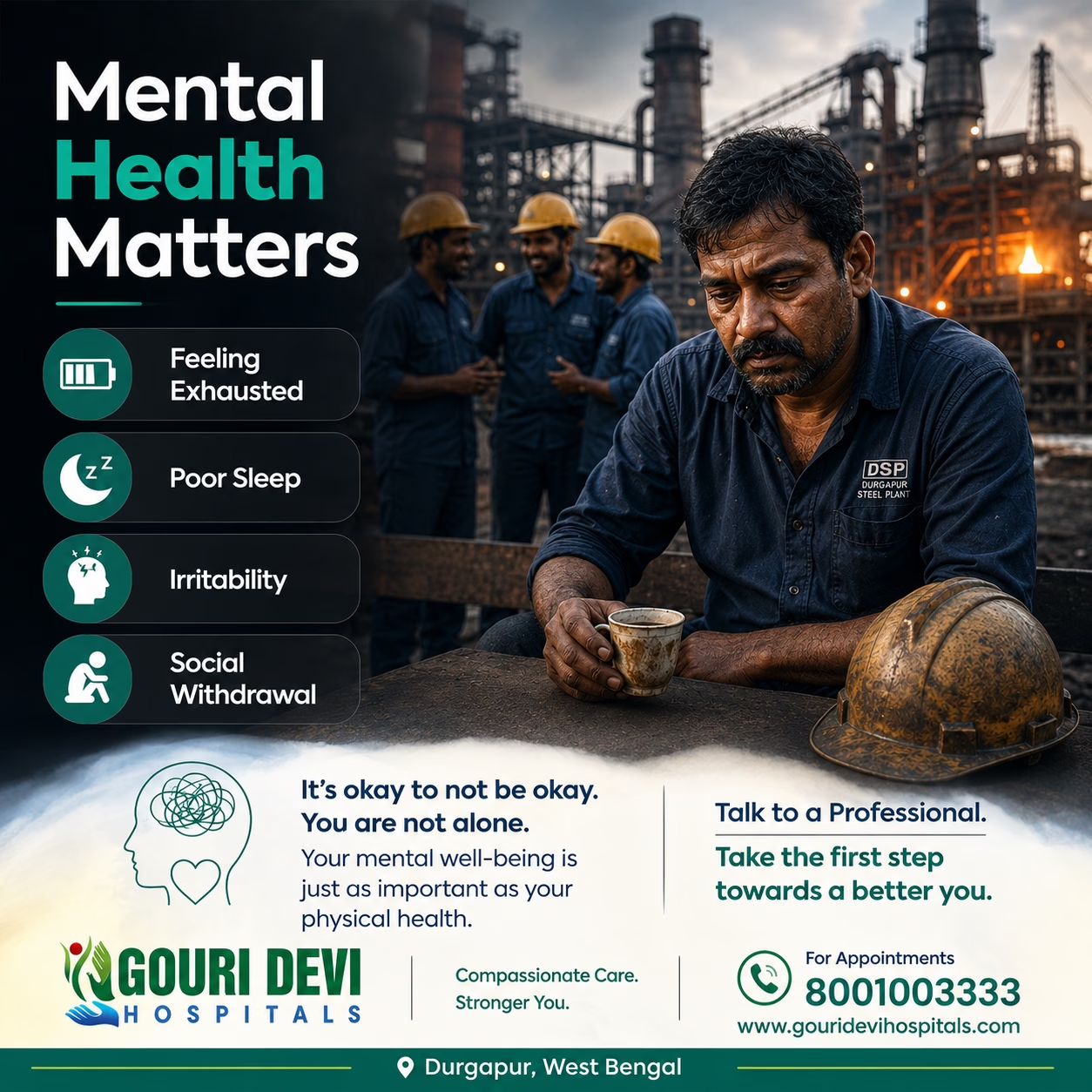
He just quietly stopped joining the others for tea. After coming home sitting in silence. His sleep went first, then his patience, then he became the version of himself his family wasn’t familiar with. His wife asked him one night what was wrong. He said he was tired.
He meant it. But tiredness does not cover what he is actually carrying.
If you work in a plant or factory anywhere across Durgapur, Burnpur, Panagarh or the industrial towns of Jharkhand, you might have just recognised yourself in that paragraph. Maybe not all of it. Maybe just enough.
Mental health in the workplace is something this entire industrial belt has been quietly living with and loudly ignoring. That needs to change. And this blog is a start.
Why Mental Health in the Workplace Directly Affects How Well You Work
Nobody sits a factory worker down and explains this clearly, so here it is.
Mental health issues in the workplace do not stay in your head. They come to work with you. They stand at the machine with you. They slow your reaction time, narrow your focus and quietly chip away at the judgment that years of experience have built in you.
For someone working around heavy machinery or monitoring temperatures inside a furnace is not just a hectic day at work. That is how accidents happen.
The World Health Organisation(WHO) says depression and anxiety cost the world over one trillion dollars every year in lost productivity. One trillion. In an industrial belt where everything depends on people showing up sharp and staying that way, worker mental health is always on the balance sheet. It is just that most management teams have never thought to look into it deeply.
Do You Recognize Any of These Signs in Yourself?
Be honest with this list. Nobody is watching.
- You sleep a full night and still wake up exhausted
- Things at work irritate you now that you never used to notice
- The people you used to enjoy being around have started feeling like too much effort
- Headaches, backaches, stomach issues that come and go and never fully clear up
- You get through your shift but you are not really there. Just going through the motions
- The things you used to do for yourself after work have slowly stopped happening
- There is a low quiet worry sitting somewhere inside you that has no clear name or cause
Three or more of those feel familiar? That is your mental health waving a flag and hoping you will finally pay attention.
These symptoms are real. They have real causes. And they can get better. But not if you keep calling it nothing.
What Is Actually Causing Mental Health Issues in the workplace?
For workers in industrial areas of Durgapur, Raniganj, Panagarh and Jharkhand, the reasons behind mental health issues are specific. Most people never connect what they are feeling inside to what is actually causing it outside. So let us name them.
- Rotating shifts mess with the brain in ways people underestimate. Your body runs on a clock. Rotating that clock every few weeks confuses your entire system. Sleep suffers first. Then mood. Then the ability to handle normal stress without snapping.
- Being around physical danger all day quietly wears the nervous system down. Heat, heavy equipment, chemicals, the constant thought of ‘something that could go wrong’. Your body handles it. Over years though, that constant low level alertness takes a toll that most workers never trace back to their working environment.
- Not knowing if your job is safe next month is itself a stress. Contract workers and daily wage employees across this belt carry a background anxiety about money and security that genuinely never switches off. This kind of fear quietly building over months and years is one of the most documented mental health issues caused by workplaces, globally.
- Living two minutes from the factory means work never actually ends. No commute means no decompression. You walk out of one pressure and straight into another. The mind never gets a proper break between the two.
And nobody talks about any of this because the culture does not allow it. Admitting you are struggling emotionally in an industrial setting still feels like something very shameful. So it all stays buried. Until you are completely exhausted.
This is the reality of mental health issues in the workplace for workers across this belt. Most of them are dealing with it in complete silence.
How Can Mental Health Issues in the Workplace Affect Physical Health?
This is where mental health in the workplace stops being an invisible problem and becomes something you can see on a medical report. Here is what unmanaged workplace stress actually does to the body over time:
High Blood Pressure
- Chronic stress keeps the body in a constant state of alert, raising blood pressure steadily over months
- Many industrial workers discover hypertension during a routine check, with no idea that workplace stress has been driving it
Heart Disease
- Prolonged mental health issues in the workplace significantly increase the risk of cardiac events
- The combination of physical labour, emotional burden and poor sleep creates serious long-term strain on the heart
Diabetes Management Problems
- Stress hormones interfere directly with how the body regulates blood sugar
- Workers already managing diabetes often find their condition worsening during periods of high workplace stress
Digestive Disorders
- The gut and the brain are deeply connected. When worker mental health suffers, the stomach feels it
- Acidity, IBS-like symptoms and chronic indigestion are extremely common in workers carrying unresolved stress
Chronic Headaches
- Tension headaches that arrive regularly and refuse to respond to medication are a classic sign that the mind is overloaded
- Many workers in this region normalise these headaches as part of the job. They are not
Reduced Immunity
- Workers dealing with ongoing mental health issues caused by workplace stress tend to fall sick more often
- The immune system weakens under prolonged cortisol exposure, making everything from the common cold to infections harder to shake off.
How Are Workplace Mental Health Problems Diagnosed and Treated?
Here is something most workers never find out because nobody tells them plainly. What you have been feeling is recognizable. It is treatable. And getting help is far less complicated than most people imagine.
This is what actually happens when someone decides enough is enough and walks through a doctor's door.
Mental Health Assessment
- A doctor or mental health professional simply sits with you and talks. About your sleep, your mood, how work has been feeling and how long things have been this way
- There are no right or wrong answers. No pass or fail. Just a conversation that helps identify what is going on and how much it is affecting your life
- For many workers, this first conversation alone brings some relief. Because finally, someone is listening
Counselling & Psychotherapy
- A trained counsellor meets with you regularly to help you understand what is driving the stress and find real ways to manage it
- It works especially well for worker mental health problems rooted in shift pressure, job insecurity and feeling stuck with no way out
- Most people who go through it say the same thing afterwards. They wish they had done it sooner
Medication When Appropriate
- Not everyone needs it. But when a doctor recommends it, there is nothing to be ashamed of
- The brain is an organ. Giving it support when it is struggling is the same logic as treating blood pressure or diabetes
- It is always the doctor's call, always reviewed regularly and never forced
Stress Management
- Breathing exercises, simple mindfulness practices and guided relaxation that take minutes but genuinely change how the body handles pressure over time
- These are not suggestions from a motivational poster. They are clinically backed tools that work when used consistently
Lifestyle Modifications
- Sleep timing, less screen time before bed, short walks, eating at regular hours, cutting back on tobacco or alcohol being used as a pressure valve
- Small changes that feel insignificant on their own but quietly add up to a real difference over weeks
- Mental health in the workplace improves faster when the basics outside of work are also being looked after
Family & Workplace Support
- When family understands what someone is going through, the pressure at home reduces and recovery moves faster
- When a supervisor responds with basic decency instead of suspicion, a worker feels safe enough to actually get better
- Mental health issues in the workplace rarely resolve fully without support from both sides of a person's life. Home and work both have to be responsive.
5 Things Workers Can Start Doing Today for Mental Health
Managing mental health in the workplace does not always mean booking a counseling appointment first. Sometimes it starts with much smaller steps.
- Treat sleep like it is part of your job. Because it actually is. Whatever rotation you are on, build a simple wind-down before bed. Dark room, phone away, consistent timing when possible. Even thirty extra minutes of proper sleep changes the day that follows.
- Find one person and tell them the truth. One person. A friend, a family member, one workmate you genuinely trust. Saying out clearly "I have not been okay" is harder than it sounds and more helpful than most people expect.
- Actually leave during your break. Step outside. Find some air and sky. Ten minutes away from the noise of the factory floor or the screens on your table. The nervous system calms down faster outdoors than anywhere else and you will feel the difference.
- Learn what stress feels like in your body before it takes over. Shoulders creeping up. Jaw clenching. Breathing that has gone shallow. These are early signs. When you notice them, five slow breaths. Every time. It truly works. Try it.
- Take your days off and stop apologising for them. The culture in most plants treats leaves as a performance weakness. That culture is making people genuinely unwell. Rest is not a reward for good behaviours. It is maintenance. The same maintenance that keeps your machinery running.
When Is the Right Time to Take a Mental Health Day Off?
When you are sitting at your task but your head left two days ago. Feeling flat, irritable and empty has been your baseline for more than two weeks without any clear reason. When you keep making small mistakes that are unlike you and the harder you push the worse it gets.
Employee mental health is not a soft issue. One day taken honestly and returned functional is worth more than two weeks of physical presence with nothing behind the eyes.
And if you take that day off and the heaviness is still there when you come back, that is the signal. Not next month. Now. Go and speak to a professional who knows how to actually help.
What Management Needs to Hear About the Mental Health of Their Employees
To every plant manager, HR head and business owner across Durgapur, Burnpur, Panagarh and the Jharkhand corridor reading this. This part is for you specifically.
Mental health employment law in India is not a distant concept anymore. The Mental Healthcare Act 2017 gives every working person in this country a legal right to mental healthcare and protection from discrimination because of it. Courts and labour boards are engaging with this law more seriously every year. Your workers are becoming more aware of these rights than you might realise. The organisations building proper structures now are the ones who will not be scrambling later.
Here is what you can actually do:
- Set up a confidential way for workers to raise concerns without worrying about their job
- Train your supervisors to spot the signs early. Withdrawal, short temper, errors from someone who is normally reliable. These things mean something
- Talk to your workers about shift rotation and actually listen. Small changes in scheduling have bigger effects on human wellbeing than most managers expect
- Get a counsellor on site even once a month. That single presence changes what feels possible to say on the floor
- Run real conversations in the language your workers think in. Bengali. Hindi. Not slide decks. Actual conversations
- Put mental health inside your safety framework. A worker who is running on empty is a genuine accident risk and it belongs there
What Employers Should Actually Be Providing to Workers for Better Mental Health
A mental health at work policy does not have to be complicated. It needs three things and only three things.
Every worker knows exactly where to go for help. Every worker trusting it will stay private. And every worker knows that asking for help will not be used against them.
Employee mental health support in practice means counselling arrangements with local clinics and hospitals, basic Employee Assistance access, supervisors who have been trained to recognise distress, and a written policy that actually protects people rather than just sitting in a folder.
Mental health employment law is heading in a direction that will make some of this compulsory sooner than many organisations are prepared for. The ones who build it now retain better workers, run safer operations and carry far less long-term cost than the ones who wait to be pushed.
To the Person Reading This at the End of a Long Shift
You have been showing up. Shift after shift, week after week, probably for years. Carrying things the people around you cannot see. Feeling things you have probably never had the right words for.
The sleep that never fully satisfies. The irritability that surprises even you. The aches without explanation. The days where you go through every motion and feel absolutely nothing inside.
None of that is who you are. And none of it has to stay this way.
If something in this article felt uncomfortably familiar, do not put your phone down and go back to pretending. Talk to someone you actually trust about your mental health issues at the workplace. Take a real day off. Book an appointment and tell the doctor everything, not just the physical stuff.
At Gouri Devi Hospitals, our team includes psychology professionals who know this region and understand the specific weight that comes with working in it. If you have been carrying something heavy and you are not sure where to begin, begin with a conversation. That is all. We are here to listen and sort things out.