“I skipped one vaccine for my baby… it shouldn’t be a big deal, right?”
It’s a thought many parents have had at some point. Maybe your baby had a mild fever, maybe life got busy, or maybe you simply felt one missed dose wouldn’t matter. You search online, and somewhere you find a reassuring line—“Relax, it’s okay to delay.”
For that moment, it feels comforting.
But here’s what most parents don’t realize; every year, hundreds of thousands of children under the age of five lose their lives to vaccine-preventable diseases, many of which could have been avoided through timely infant vaccines!
What seems like a small decision today can quietly create a gap in protection during the most vulnerable stage of your child’s life.
This is where childhood immunizations and carefully designed childhood vaccination schedules play a critical role. Each dose, each timing, and each of the required childhood vaccines is backed by years of scientific research.
In this guide, we’ll help you understand whether skipping a vaccine is ever safe, how childhood vaccination actually protects your baby, and why even a single missed dose may matter more than it seems.
What Are Infant Vaccines & Why Do They Matter?
Infant vaccines are specially designed immunizations given in the first year of life to protect babies from potentially life-threatening diseases. At birth, a baby’s immune system is still developing, making them highly vulnerable to infections.
Vaccines work by training their own immune system to recognize and fight harmful pathogens without actually causing the disease.
This is why childhood immunization is considered one of the most effective preventive healthcare measures globally. Diseases like measles, polio, and diphtheria which once caused widespread mortality are now largely controlled due to childhood immunizations.
Skipping infant vaccines doesn’t just delay protection but it leaves a critical gap where your baby is exposed to serious infections.
Can You Skip a Baby Vaccination?

Medically speaking, skipping infant vaccines is not advised unless specifically recommended by a pediatrician for a valid medical reason.
Here’s why:
- Vaccines are timed based on when babies are most vulnerable
- Delays can increase the risk of infection
- Some diseases progress rapidly in infants
While certain situations (like high fever or acute illness) may require temporary postponement, these decisions should always be guided by a doctor not by personal choice or misinformation.
Parents often confuse flexibility in childhood vaccination schedules with optionality. In reality, these schedules are carefully designed to ensure maximum protection at the right time.
Most Important Vaccines for Babies
Knowing the most important vaccines for babies helps parents understand why skipping any of them is risky.
Some key required childhood vaccines include:
- BCG (for tuberculosis)
- Hepatitis B
- DTP (Diphtheria, Tetanus, Pertussis)
- Polio
- Hib (Haemophilus influenzae type B)
- Rotavirus
- Pneumococcal vaccine
Each of these required childhood vaccines plays a vital role in preventing diseases that can cause severe complications or even death.
For example:
- The childhood tetanus vaccine protects against a life-threatening bacterial infection
- The childhood pneumonia vaccine helps prevent serious lung infections
- The childhood influenza vaccine reduces the risk of seasonal flu complications
These are not optional but they are essential components of childhood vaccination.
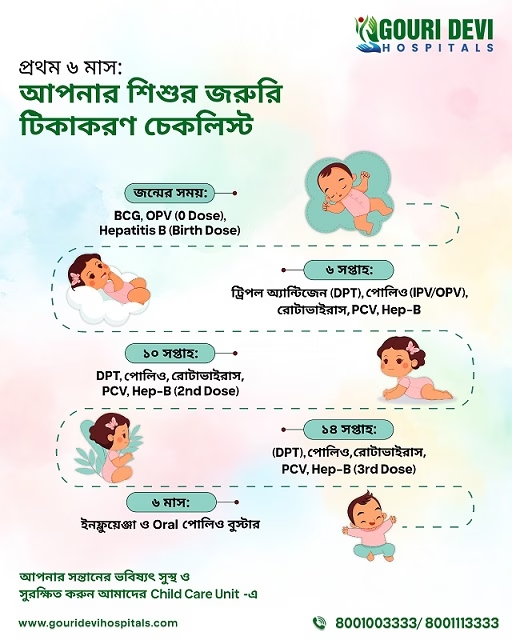
Vaccination Chart for Babies in India: What Parents Should Know
A standard vaccination chart for babies in India outlines when each vaccine should be administered, starting from birth up to adolescence. Usually you receive this chart from the hospital at the time of discharge after child delivery.
Key stages include:
- Birth: BCG, OPV, Hepatitis B
- 6–14 weeks: Primary doses (DTP, Polio, Rotavirus)
- 6 months onward: Flu vaccines begin
- 9 months: Measles/MMR
- 12–15 months: Booster doses
Child vaccination awareness in India is currently at an all-time high, with full immunisation coverage reaching 98.4% as of January 2026. This is really a hopeful number. Following the vaccination chart for babies in India has ensured that every child receives timely protection even in the rural areas.
So, keep your baby’s vaccination chart handy and check time to time to thick every box there.
The childhood vaccination schedules are based on years of clinical research and epidemiological data. Deviating from this schedule without medical advice can compromise immunity.
If a dose is missed unintentionally, pediatricians can guide you with a “catch-up schedule” within the broader childhood vaccination schedules framework.
Common Myths About Childhood Immunizations
Despite medical consensus, many myths still surround childhood immunizations:
Myth 1: Too many vaccines overload the immune system
Fact: Babies encounter thousands of antigens daily; vaccines are minimal in comparison.
Myth 2: Natural immunity is better
Fact: Natural infections can lead to severe complications that may lead your baby to a fatal situation. Vaccines provide safe immunity.
Myth 3: Some vaccines are unnecessary
Fact: All required childhood vaccines in the chart are included based on disease risk and severity.
These misconceptions often lead parents to delay or skip childhood vaccination, increasing preventable risks. Talk to doctors if you have any queries or confusion but don’t simply search online any rely on the answers.
What Happens If You Skip Required Childhood Vaccines?
Skipping required childhood vaccines can have serious consequences:
- Increased susceptibility to infections
- Higher risk of hospitalization
- Potential long-term complications
- Risk of disease outbreaks in the community
For example, missing the childhood pneumonia vaccine can expose your child to severe respiratory infections. Similarly, avoiding the childhood tetanus vaccine can leave them vulnerable to a potentially fatal condition.
Even diseases like influenza can be dangerous in infants. That’s why childhood flu vaccination and the childhood influenza vaccine are crucial.
Why These Vaccines Matter More Than You Think: Real Risks, Real Numbers
Childhood Influenza Vaccine: More Than Just a Seasonal Illness
The childhood influenza vaccine is often underestimated because flu is commonly seen as a mild illness. However, in young children, especially under 5 years, it can turn severe very quickly.
Globally, seasonal influenza is responsible for up to 650,000 respiratory deaths annually, and children form a significant vulnerable group. Studies indicate that children under 5 years account for millions of severe flu cases every year, with a high rate of hospitalization.
In India, flu-related complications like pneumonia are among the leading causes of pediatric admissions during peak seasons.
This is why childhood flu vaccination is not optional—it is preventive care. Regular childhood flu vaccination reduces:
- Hospitalization risk by up to 40–60%
- Severity of illness in infected children
- Spread within families and communities
When included as part of childhood vaccination, the childhood influenza vaccine plays a key role in reducing seasonal disease burden and protecting high-risk children.
Childhood Flu Vaccination: Preventing Complications Before They Start
Many parents delay or skip childhood flu vaccination, assuming flu is manageable. But what’s often overlooked is how quickly complications can escalate in children.
Without proper childhood immunizations, influenza can lead to:
- Severe pneumonia
- Dehydration
- Worsening of asthma or underlying conditions
- ICU admissions in extreme cases
Data shows that a large percentage of children hospitalized due to flu were not vaccinated.
This makes childhood flu vaccination an essential part of required childhood vaccines, especially for children attending school, daycare, or living in densely populated environments.
Childhood Tetanus Vaccine: A Rare but Deadly Threat
Tetanus may not be common today—but that’s precisely because of widespread childhood immunization.
Without the childhood tetanus vaccine, the bacteria Clostridium tetani can enter the body through minor cuts or wounds and produce a toxin that affects the nervous system.
Key facts parents must know:
- Tetanus has a case fatality rate of 10–20%, even with medical care
- In newborns (neonatal tetanus), mortality can be significantly higher
- The disease causes painful muscle stiffness, breathing difficulty, and can become fatal
Before routine infant vaccines and required childhood vaccines, tetanus was a major cause of child mortality.
The childhood tetanus vaccine, given as part of combination doses in childhood vaccination schedules, ensures long-term protection against this otherwise life-threatening disease.
Childhood Pneumonia Vaccine: Protecting Against One of the Leading Fatal Diseases
Pneumonia remains one of the leading causes of death in children under 5 globally.
According to global health data:
- Pneumonia accounts for around 14% of all deaths in children under 5
- It leads to hundreds of thousands of child deaths annually worldwide
- In India, pneumonia contributes significantly to pediatric hospitalizations
The childhood pneumonia vaccine protects against Streptococcus pneumoniae, a major cause of:
- Severe lung infections
- Meningitis (brain infection)
- Bloodstream infections (sepsis)
Without this protection, infants are at a much higher risk of severe disease progression.
Including the childhood pneumonia vaccine as part of infant vaccines and required childhood vaccines dramatically reduces:
- Hospital admissions
- Severe complications
- Mortality rates
This is why it is considered one of the most important vaccines for babies and is strongly emphasized in the vaccination chart for babies in India.
When Can Vaccines Be Delayed?
While skipping is discouraged, certain conditions may warrant temporary delay:
- High fever
- Severe allergic reactions (rare)
- Specific medical conditions
In such cases, doctors modify childhood vaccination schedules to ensure safety without compromising protection.
Never make these decisions independently—always consult a pediatrician.
How to Stay on Track with Childhood Vaccination
Maintaining consistency with childhood vaccination is easier with a structured approach:
- Follow your doctor’s schedule
- Maintain a vaccination record
- Set reminders for upcoming doses
- Refer to the vaccination chart for babies in India regularly
Parents should also discuss any concerns openly with healthcare providers instead of relying on unverified sources.
Final Thoughts: Should You Ever Skip Infant Vaccines?
The evidence is clear – infant vaccines are essential, safe, and life-saving.
Skipping or delaying infant vaccines without medical guidance can expose your child to unnecessary risks. The structured approach of childhood immunizations, supported by well-researched childhood vaccination schedules, ensures that your baby receives protection exactly when needed.
From the most important vaccines for babies to specific protections like the childhood influenza vaccine, childhood flu vaccination, childhood tetanus vaccine, Rotavirus, childhood pneumonia vaccine, and other vaccines as per the immunization chart, each plays a critical role in safeguarding your child’s future.
If you ever feel uncertain, the best step is not to skip but to consult.
Consult Experts for the Right Guidance
At Gouri Devi Hospitals, our pediatric specialists ensure that every child receives the right vaccine at the right time, following the recommended vaccination chart for babies in India. Your child’s health deserves expert care, don’t leave it to guesswork or any rigidity.
More Resource
- Is Chest Tightness and Discomfort Always a Heart Problem? Identifying Causes and Warning Signs
- Why Women in Mining Areas Face Early Menopause
- How Serious Is Coughing Up Blood and When Should You Worry?
- Scalp Psoriasis and Seborrheic Dermatitis: How to Tell the Difference
- Relationship Between Brain Fog and Dizziness: Warning Signs You Shouldn’t Ignore